One of the most common questions we get at TP Dumpsters is: "What can I actually put in the dumpster?" It's an important question — tossing the wrong items can result in extra fees, service refusal, or even legal penalties under California regulations.
This comprehensive guide covers exactly what's accepted in a standard roll-off dumpster, what's prohibited, and how to handle items that need special disposal. Knowing the rules upfront saves you money, avoids headaches, and keeps your project running smoothly.
What CAN Go in a Dumpster
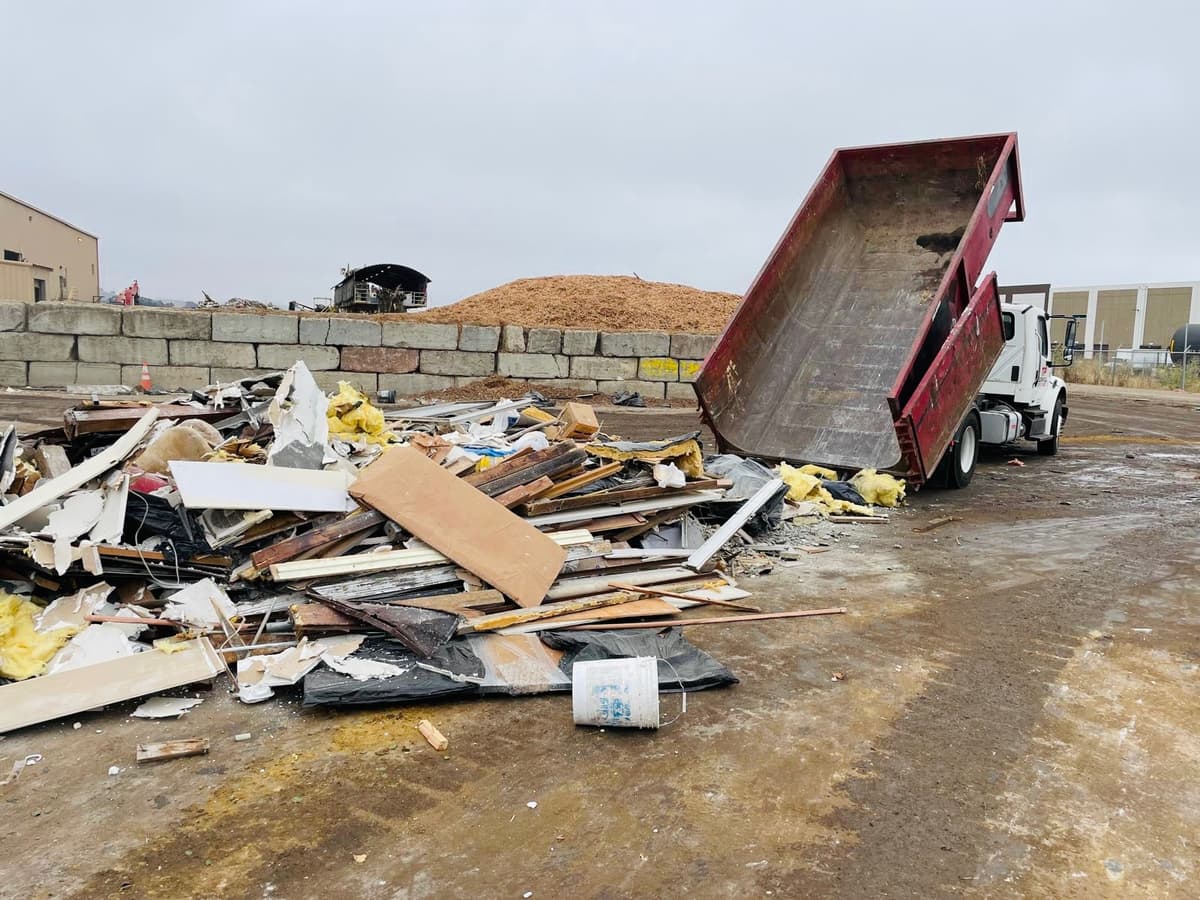
The good news? Most of the debris from typical cleanout, renovation, construction, and landscaping projects is perfectly acceptable in a standard roll-off dumpster. Here's a comprehensive list:
Household Items
Construction & Renovation Debris
Yard Waste & Landscaping Debris
For more on handling yard waste specifically, check out our yard waste disposal guide.
Large Appliances (With Conditions)
Most large appliances can go in a dumpster, but there's an important exception:
- Washers & dryers — ✅ Accepted
- Dishwashers — ✅ Accepted
- Stoves & ovens — ✅ Accepted
- Water heaters — ✅ Accepted
- Refrigerators & freezers — ⚠️ Only AFTER refrigerant (Freon) has been professionally removed and certified
- Air conditioning units — ⚠️ Same as refrigerators — refrigerant must be removed first
What CANNOT Go in a Dumpster
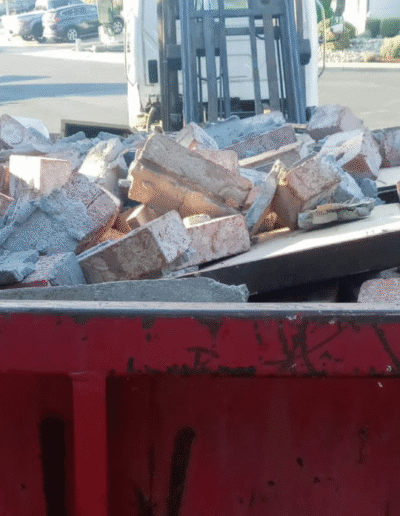
Certain materials are prohibited from standard roll-off dumpsters due to environmental regulations, safety hazards, or disposal requirements. In California, these restrictions are stricter than in many other states. Here's what you cannot put in your dumpster:
Hazardous Materials
Batteries & Electronics
Tires
Tires are banned from California landfills and cannot go in a standard dumpster. They must be taken to a licensed tire recycler. Most tire shops accept old tires (sometimes for a small fee). If you have a large quantity, contact your local waste management agency for commercial tire recycling options.
Medical & Biological Waste
Asbestos-Containing Materials
Asbestos cannot go in any standard dumpster. It requires certified abatement by a licensed professional and disposal at a facility permitted to accept asbestos waste. If your renovation involves a pre-1980 building, have materials tested before demolition.
⚠️ California Penalty Warning
Illegally disposing of hazardous materials in California can result in fines ranging from $1,000 to $70,000 per violation, plus criminal penalties for serious offenses. It's not worth the risk — always dispose of prohibited items through proper channels.
How to Dispose of Prohibited Items
So what do you do with items that can't go in the dumpster? Here are California-specific resources:
Household Hazardous Waste (HHW)
Every county in the Bay Area operates household hazardous waste collection programs. These accept paint, chemicals, batteries, electronics, and other prohibited items — usually for free:
- Alameda County — HHW facilities in Oakland and Livermore, plus mobile collection events
- Contra Costa County — HHW collection at transfer stations in Martinez, Richmond, and other locations
- San Francisco — Recology HHW drop-off facility
Electronics Recycling (E-Waste)
California's e-waste law (SB 20) requires electronics to be recycled, not landfilled. Free drop-off options include:
- Best Buy and Staples accept most electronics for free recycling
- County e-waste collection events
- Certified e-waste recyclers (search CalRecycle's database)
Paint
California participates in the PaintCare program, which provides free drop-off locations for leftover paint at participating retailers including many hardware stores, paint stores, and transfer stations.
Sorting Tips to Avoid Extra Charges
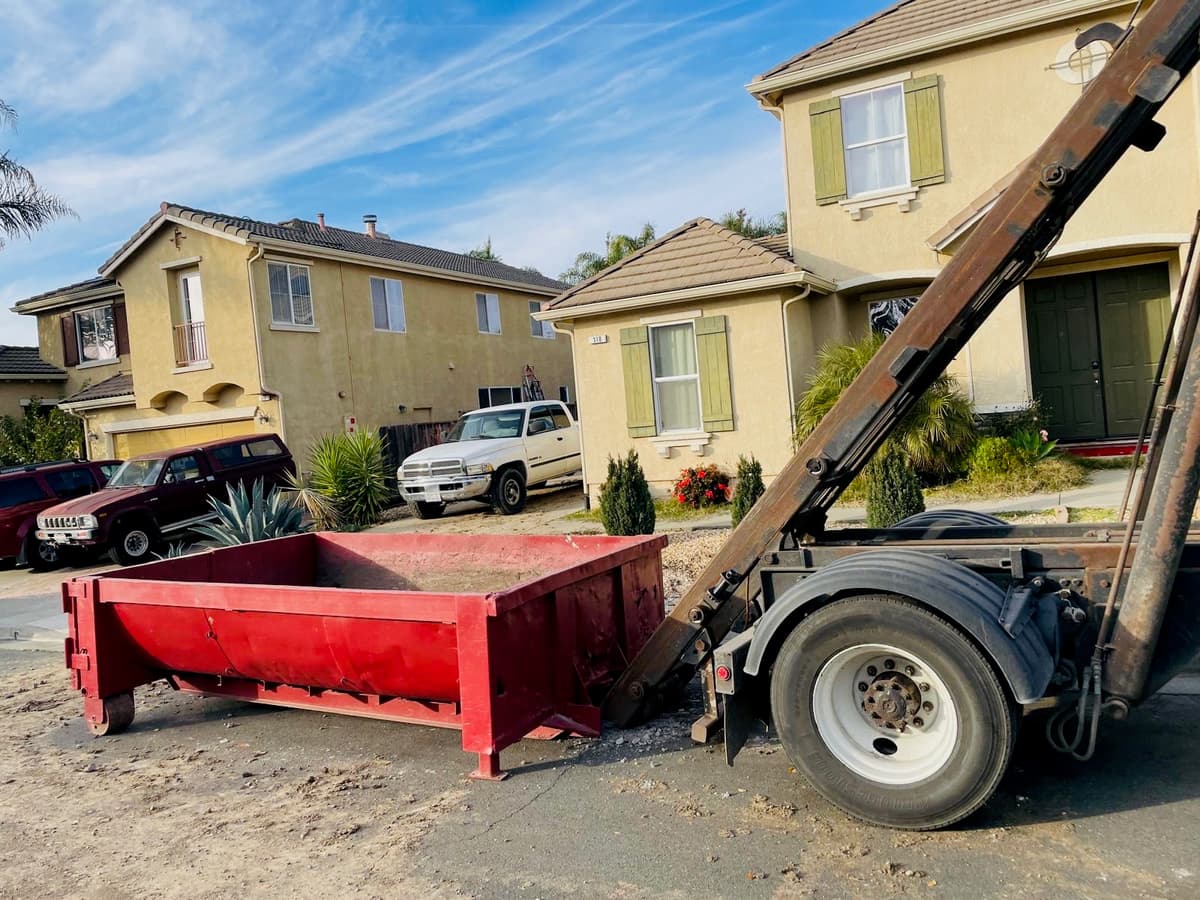
Proper sorting before and during loading helps you avoid fees and makes disposal more efficient:
- Separate prohibited items first — Before you start loading the dumpster, set aside anything that can't go in. Create a separate pile for HHW, electronics, and tires.
- Check containers — Empty paint cans are sometimes accepted; full ones never are. When in doubt, ask your hauler.
- Remove refrigerant before discarding appliances — Have a certified technician remove Freon from refrigerators and AC units, then they can go in the dumpster.
- Separate metals — Scrap metal can often be recycled for money. Separate copper, aluminum, and steel from general debris.
- Don't hide prohibited items — Burying banned materials under regular debris doesn't work. Transfer stations inspect loads, and finding prohibited items causes delays and fees.
TP Dumpsters: Clear Rules, No Surprises
At TP Dumpsters, we want you to know exactly what's allowed before you start loading. Our team is always available to answer questions about specific items — just call (510) 650-2083 or reach out through our booking page. We're bilingual (English & Spanish) and happy to help.
We serve the entire Bay Area, including Oakland, Concord, Richmond, Hayward, Walnut Creek, San Leandro, and surrounding communities. Same-day delivery, transparent pricing, no hidden fees — that's the TP Dumpsters way.
Questions About What Goes in the Dumpster?
Call our team for quick answers — or book online and we'll confirm everything before delivery.